

Bridge Loan or DSCR Loan? Choosing the Right Exit When Your Rehab Wraps
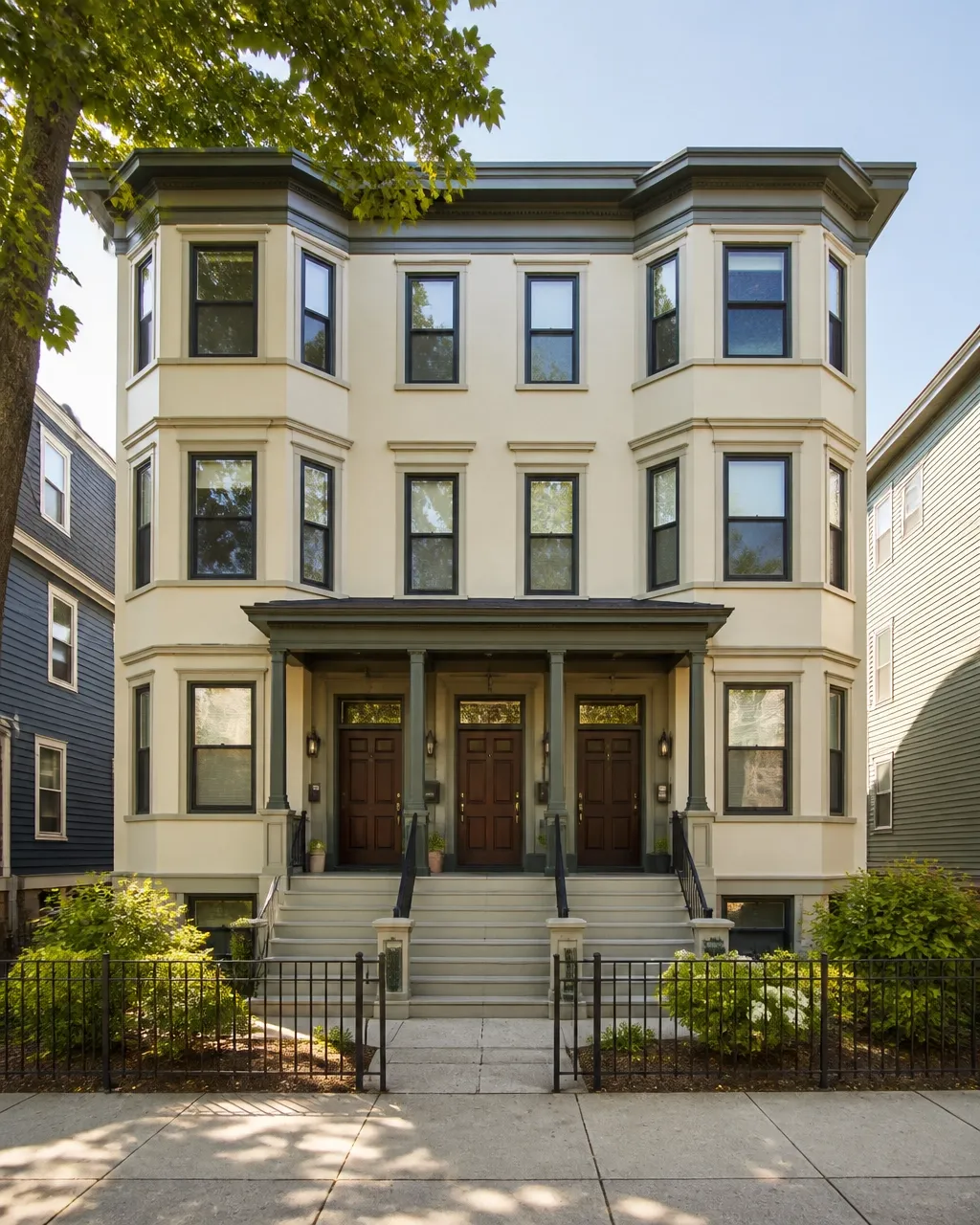
Your rehab is complete. The property looks better, rents can move toward market, and the next question is immediate:
Should you sell, extend the bridge loan, or refinance into a DSCR loan?
For many real estate investors, the strongest long-term strategy is a planned transition: use bridge financing or a hard money loan for real estate to acquire and improve a property, then transition into a DSCR rental property loan once the asset is stabilized.
This strategy can help you move quickly, reduce unnecessary cash to close, protect your personal credit from being the primary source of project funding, and turn forced appreciation into durable cash flow.
The Core Strategy: Bridge In, DSCR Out
Bridge loans and DSCR loans solve different problems.
A bridge loan is designed for the acquisition and repositioning phase. It can help you compete for a property with deferred maintenance, low occupancy, or below-market rents: situations where conventional financing may be too slow or inflexible.
A DSCR loan is designed for the long-term hold phase. Once the property is repaired, leased, and producing income, the loan is evaluated primarily through the property’s ability to cover its debt service.
The transition typically works like this:
- Acquire the property with bridge or fix-and-flip financing.
- Complete the renovation or stabilization plan.
- Lease the property and document market-supported rental income.
- Refinance the bridge balance into a DSCR rental property loan.
- Hold for cash flow, pursue a rate-term refinance, or access equity for the next acquisition.
That is the difference between financing one project and building a repeatable investment platform.
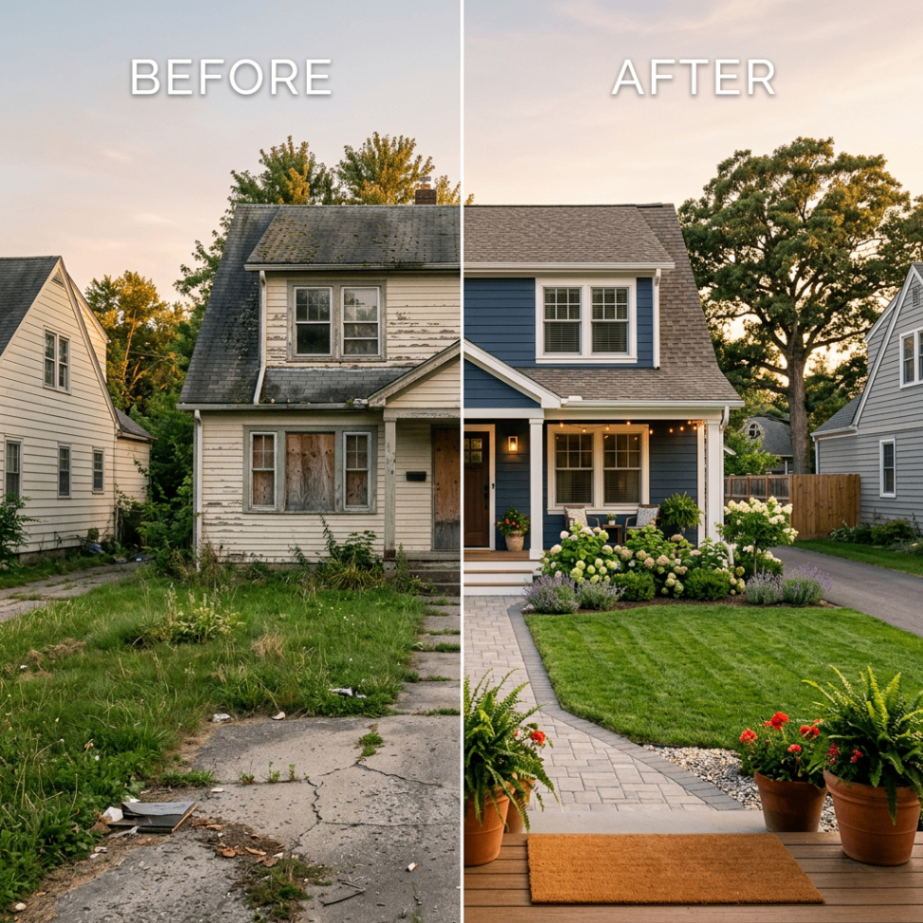
When a Bridge Loan Makes Sense
Bridge loans are short-term financing tools. They are most useful when the property needs a fast execution strategy before it can qualify for permanent rental financing.
A bridge loan may be appropriate when:
The property needs deferred maintenance.
The roof, systems, interiors, exterior, or life-safety components may need work before the property can command market rents.Occupancy is low or nonexistent.
A property without reliable rental income may not meet the requirements for a long-term DSCR loan at acquisition.Rents are below market.
If the current rent roll does not reflect the property’s potential, the asset may need improvements, better management, or lease turnover before refinancing.The seller requires a fast closing.
A competitive purchase may not allow time for a lengthy conventional underwriting process. Properly prepared files may be eligible for a 7–10-day closing timeline, depending on the property, documentation, appraisal, and underwriting requirements.You need financing based on the project: not only your personal income.
Real estate investors often prefer entity-based financing that evaluates the asset, business plan, exit strategy, and borrower profile together.
ClearBlu’s Fix & Flip Loans are designed for non-owner-occupied single-family and 2–4 unit properties that require renovation. The program information states that prior experience is not required, making this a potential path for new developers who have a well-defined scope of work and credible execution plan.
For rent-ready 1–4 unit properties with no planned renovations, ClearBlu’s Stabilized Bridge program may provide another short-term financing path while you finalize the right long-term debt strategy.
When a DSCR Loan Is the Better Exit
A DSCR loan is typically the better fit when you intend to hold the property as a rental and the income supports the proposed debt service.
A DSCR refinance may make sense when:
- The renovation is complete.
- The property is rent-ready and legally occupiable.
- Leases are signed at supportable market rents.
- The property’s income meets the lender’s DSCR requirement.
- The appraised value supports the desired loan amount.
- You want predictable long-term financing instead of short-term bridge debt.
The key calculation is straightforward:
DSCR = Property Income ÷ Property Debt Service
For example, suppose a four-unit property produces $6,800 in gross monthly rent. That equals $81,600 in annual gross rental income.
If the proposed DSCR loan has annual principal and interest of approximately $37,200, while annual taxes and insurance total $13,200, the annual property debt obligation is $50,400.
$81,600 ÷ $50,400 = 1.62 DSCR
That result indicates the property generates $1.62 in gross rental income for every $1.00 of the calculated debt obligation. Actual lender calculations, expense treatment, vacancy assumptions, and qualification standards vary, but the example demonstrates the basic transition analysis.
ClearBlu’s One-Four Unit Rental Loans currently outline 30-year fixed and adjustable options, purchase and refinance structures, and DSCR qualification based on rental income compared with PITIA. The page also identifies options for rate-term refinancing and cash-out strategies.
Bridge Loan vs. DSCR Loan: A Practical Comparison
| Feature | Bridge or Hard Money Loan | DSCR Rental Property Loan |
|---|---|---|
| Primary purpose | Acquire, renovate, or reposition a property | Hold a stabilized rental |
| Typical timing | Acquisition through rehab and lease-up | Long-term ownership |
| Property condition | May accommodate transitional properties, depending on program | Generally rent-ready and income-producing |
| Underwriting focus | Asset, scope of work, value, borrower, and exit | Property income, value, debt service, and rental performance |
| Closing speed | Often faster when the file is complete | May require more income and property documentation |
| Loan structure | Commonly short-term and interest-only | Commonly long-term, fixed or adjustable |
| Best exit | Sale or refinance | Long-term cash flow, rate-term refinance, or cash-out |
The correct question is not, “Which loan is better?”
The better question is: What job does the capital need to perform right now?
The Math of a Bridge-to-DSCR Transition
Consider this illustrative 1–4 unit rental scenario:
- Purchase price: $420,000
- Renovation budget: $90,000
- Total project basis: $510,000
- Closing costs: $0 for this illustration
- Bridge financing at 85% of total basis: $433,500
- Borrower contribution: $76,500
- Completed appraised value: $650,000
- Proposed DSCR refinance at 70% LTV: $455,000
The DSCR refinance could repay the estimated $433,500 bridge balance and potentially leave approximately $21,500 before applicable lender fees, reserves, escrows, or other transaction adjustments.
The investor would still own an asset valued at approximately $650,000, subject to the accuracy of the appraisal and market conditions. The property would also need to demonstrate sufficient rental income to qualify for the DSCR loan.
This is a financing illustration: not an investment partnership or profit-sharing arrangement. Actual terms depend on underwriting, valuation, property condition, rents, insurance, taxes, credit, liquidity, and the selected program.
How to Prepare for the Refinance Before Rehab Ends
Waiting until the bridge maturity date to think about your exit creates unnecessary pressure. Begin preparing for the DSCR transition well before the project is complete.
Use this checklist:
Underwrite the DSCR exit before closing the bridge loan.
Estimate market rents, taxes, insurance, vacancy, repairs, and the expected refinance balance.Track every renovation expense.
Keep invoices, draw records, permits, inspections, warranties, and before-and-after photographs.Confirm the property can be legally rented.
Resolve outstanding permits, code issues, certificates of occupancy, and required inspections.Build a clean rent record.
Maintain signed leases, tenant ledgers, deposit records, and bank statements that clearly show rental income.Order the appraisal early enough to solve problems.
A lower-than-expected value can affect your loan amount and may require a paydown or revised exit plan.Review insurance before applying.
Premium increases can materially affect the property’s cash flow and DSCR.Start the refinance conversation 60–90 days before maturity.
This creates time to address documentation gaps, appraisal issues, lease-up delays, or extension requirements.

How the Strategy Can Reduce Cash Pressure and Protect Personal Credit
A properly structured real estate financing plan can help you avoid funding every project with personal credit cards, unsecured borrowing, or excessive personal liquidity.
That does not mean your personal credit will never be reviewed. Lenders may still evaluate credit history, experience, liquidity, guarantees, and entity documentation. However, an asset-focused strategy can help align the debt with the property’s value and income potential.
The objective is to:
- Use project capital for project costs.
- Keep reserves available for operational surprises.
- Avoid unnecessary personal debt accumulation.
- Move stabilized assets into longer-term financing.
- Preserve capacity for the next acquisition.
For new developers, this structure also creates a clearer learning path. You do not need to pretend to have a decade of experience. You need a realistic property, a defensible scope of work, organized documentation, and a credible exit plan.
When You Should Not Force a DSCR Exit
A DSCR refinance is not automatically the right answer.
Consider another strategy if:
- The property is not yet stabilized.
- The completed value does not support the desired loan amount.
- Market rents are lower than your original projections.
- The property has unresolved permitting or condition issues.
- The loan payment would weaken cash flow.
- Your original strategy was to sell after renovation.
If the asset is not ready, an extension, additional stabilization period, sale, or revised capital plan may be more appropriate. The strongest investors do not force a refinance simply because the rehab is finished. They choose the exit that supports the property and the broader portfolio.
Plan the Exit Before You Close the Loan
Bridge loans provide speed and flexibility when a property is transitional. DSCR loans provide a path to long-term rental ownership when the asset produces reliable income.
Used together, they create a powerful sequence:
Acquire. Improve. Stabilize. Refinance. Scale.
ClearBlu Group supports real estate investors with fix-and-flip financing, stabilized bridge financing, and 1–4 unit rental property loans. Our team evaluates the property, the plan, and the borrower together to help you identify the right lending path.
Ready to plan your next acquisition or refinance? Apply through ClearBlu’s real estate lending portal. Bring the opportunity. We’ll bring clarity, direction, and a capital strategy built for your next stage of growth.