
From Fix-and-Flip to Ground-Up: How to Graduate to New Construction With the Same Lender

You have completed a few renovations. You understand acquisition, construction budgets, contractor coordination, inspections, and exit planning. Now you are looking at a different opportunity: building a new 1–4 unit residential property from the ground up.
What changes when you move from fix-and-flip financing to ground up construction loans? More importantly, how can you make the transition with less friction?
The answer often begins with your lender relationship. When a lender already knows how you evaluate deals, manage renovations, communicate through challenges, and execute exits, you may not have to start from zero. Your prior performance can become part of the underwriting story for your next stage of growth.
Fix-and-Flip Is Often the First Step Toward Development
Fix-and-flip investing teaches disciplines that translate directly into new construction.
You learn how to:
- Analyze an acquisition using current value, projected after-repair value, and realistic comparable sales.
- Build and manage a scope of work.
- Coordinate contractors, suppliers, inspections, and draw requests.
- Control change orders and protect the project timeline.
- Create a credible sale or refinance exit before closing.
- Communicate with your lender when conditions change.
These are not minor skills. They are the operating foundation of successful development.
ClearBlu’s Fix & Flip financing program is designed for non-owner-occupied single-family and 2–4 unit residential properties. Current program information includes loan amounts from $50,000 to $3 million, terms beginning at 12 months, and financing that may cover up to 100% of the renovation budget, subject to leverage, property, borrower, and underwriting requirements.
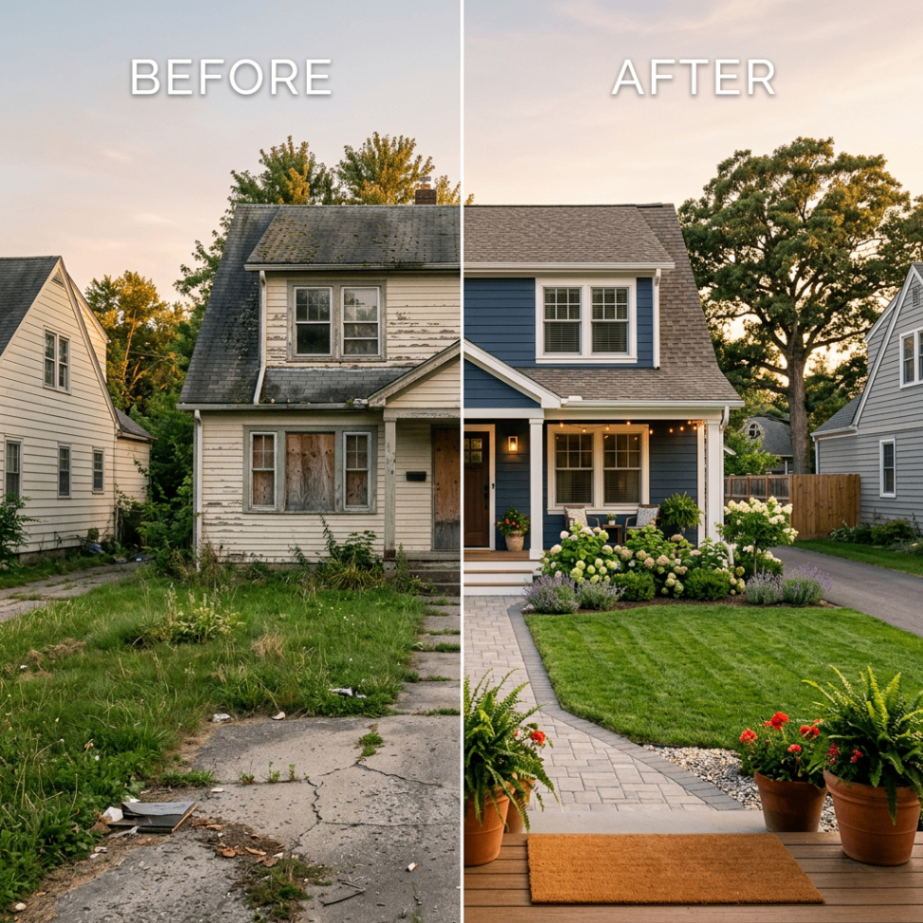
The goal is not simply to complete one profitable renovation. The goal is to build repeatable execution.
That execution history can help you make a stronger case when you pursue ground-up construction.
The Ground-Up Transition Requires a Higher Level of Control
A renovation starts with an existing structure. Ground-up construction starts with land, a teardown, or an approved development opportunity. You are creating the collateral rather than improving an existing asset.
That difference changes the lender’s questions.
For a new construction project, underwriting typically focuses on:
- Land and zoning: Is the site suitable for the proposed use? What is permitted under current zoning?
- Plans and approvals: Are architectural plans complete? Are permits issued or on a clear path?
- Construction budget: Are costs detailed by trade, including site work, foundation, framing, mechanical systems, finishes, and landscaping?
- General contractor capability: Does the contractor have relevant experience, licensing, insurance, and references?
- Draw structure: Are construction draws tied to verifiable milestones?
- Contingency reserves: Is there enough room for cost increases, delays, and unforeseen conditions?
- Exit certainty: Will the project be sold, refinanced into a rental loan, or held as part of a broader portfolio?
ClearBlu’s Ground Up Construction program is focused on eligible new 1–4 unit residential projects. Current program information includes loan amounts from $50,000 to $3 million, 12-month terms, and longer terms considered for experienced developers. Construction financing may include up to 100% of eligible construction costs, subject to the applicable land-value, loan-to-cost, loan-to-value, and project requirements.
The program also identifies prior building experience as a requirement. That matters. Completing renovations can demonstrate strong project management, but a ground-up application must still show that the borrower, contractor, partner, or development team can manage new construction.
Four Milestones That Signal You May Be Ready
Are you ready to graduate, or are you simply excited by the next opportunity? Use these milestones to evaluate your readiness.
1. You Have Demonstrated Renovation Discipline
A lender wants evidence that you finish what you start.
Your track record should show:
- Projects completed on schedule or with clearly documented reasons for delays.
- Budgets managed with limited unexplained overruns.
- Draw requests supported by completed work.
- Contractors paid according to an organized schedule.
- Loan payments made on time.
- Clean exits through resale or refinance.
Your previous projects become more valuable when you can document them. Maintain purchase statements, renovation budgets, final settlement statements, before-and-after photos, invoices, draw histories, and refinance documents.
2. You Can Control Costs Before Construction Begins
Ground-up projects create more opportunities for cost surprises. Site conditions, utility connections, permitting, materials, labor, and design changes can all affect the final budget.
Before applying, prepare:
- A line-item construction budget.
- A realistic timeline with permitting and inspection milestones.
- A clearly identified contingency reserve.
- Fixed or well-supported contractor bids.
- A draw schedule tied to completed work.
- A plan for handling change orders.
Cost control begins before the first shovel enters the ground. If your budget is vague, your financing request will be difficult to evaluate.
3. You Have a Qualified Construction Team
If you are a new developer, you do not necessarily need to know every construction detail yourself. You do need a credible team.
A strong package may include:
- A licensed general contractor with relevant new-build experience.
- A project manager or development partner.
- An architect familiar with the property type and local requirements.
- Reliable subcontractors and suppliers.
- Evidence of completed projects similar in size and complexity.
New developers can build toward ground-up eligibility by starting with manageable 1–4 unit renovations, learning the development process, and partnering with experienced professionals. Clear communication is essential. Lenders need to understand who is responsible for each decision.
4. Your Exit Strategy Is Clear Before Closing
A project is not complete when construction ends. It is complete when the financing is repaid or successfully transitioned.
Your exit may involve:
- Selling the completed property.
- Refinancing into a competitive DSCR loan after stabilization.
- Holding the property as a long-term rental.
- Rolling the finished asset into a larger portfolio strategy.
The projected value and rental income must support the plan. If you intend to hold, analyze market rent, taxes, insurance, debt service, and operating expenses conservatively. A clear DSCR transition can help maximize long-term cash flow and preserve your ability to pursue the next acquisition.
Why Staying With the Same Lender Can Reduce Friction
A new lender may evaluate your entire history from the beginning. Your existing lender may already understand:
- How you communicate.
- How you respond to inspection items.
- Whether your budgets are realistic.
- How you manage contractors.
- Whether you meet payment obligations.
- How you execute a sale or refinance.
That familiarity does not eliminate underwriting. Ground-up projects still require complete plans, budgets, approvals, and team documentation. However, it can make the conversation more efficient.
A relationship-focused lender may also help you evaluate how to structure the transition, whether that involves a direct ground-up loan, a land-and-construction structure, or a future DSCR refinance.
It may also help you minimize cash to close. Depending on the project, leverage, land position, and borrower profile, financing may cover a significant portion of eligible costs. The exact structure must be reviewed deal by deal.
Entity borrowing can also help you manage personal credit capacity more strategically. However, do not assume an entity loan eliminates personal obligations. ClearBlu’s current ground-up program identifies full recourse, so review guarantees, liquidity requirements, and the effect on your overall financial profile before proceeding.
Prepare for a Faster Closing by Preparing Earlier
A 7–10-day closing can be a meaningful advantage when you are competing for a property or need to meet a seller’s timeline. It is not automatic. Speed depends on property fit, complete documentation, clear title, appraisal or valuation requirements, borrower readiness, and final underwriting approval.
To support a faster process, prepare:
- Entity formation documents.
- Personal and business financial information.
- Recent project history.
- Purchase contract or land documentation.
- Plans, permits, and zoning information.
- Contractor bids and insurance.
- Construction budget and timeline.
- Projected completed value.
- Sale or refinance exit strategy.
The earlier you bring the opportunity to your lender, the more time you have to identify gaps before they become closing delays.

Build the Next Stage With a Lender Who Understands the Work
Moving from fix-and-flip financing to ground up construction loans is not a leap into an unrelated strategy. It is a progression from improving existing housing to creating new housing.
The imperative is preparation.
Build a reliable renovation track record. Strengthen your cost controls. Assemble the right construction team. Validate zoning and permits. Define the exit. Then bring the opportunity to a lender who can evaluate both the project and the way you execute.
Whether you are an experienced investor or a new developer building toward your first ground-up opportunity, ClearBlu can help you identify the appropriate capital path through its broader real estate lending solutions.
Ready to evaluate your next project? Apply through ClearBlu’s real estate lending page. Submit your property, budget, borrower, and exit details so you can move forward with greater clarity, minimize unnecessary cash to close, and position your next build for long-term growth.
Your next property may be more than another deal. It may be the project that unlocks your development future.