
Ground-Up Construction Loans for First-Time Developers: How to Build Your First New Build Without a 10-Year Track Record
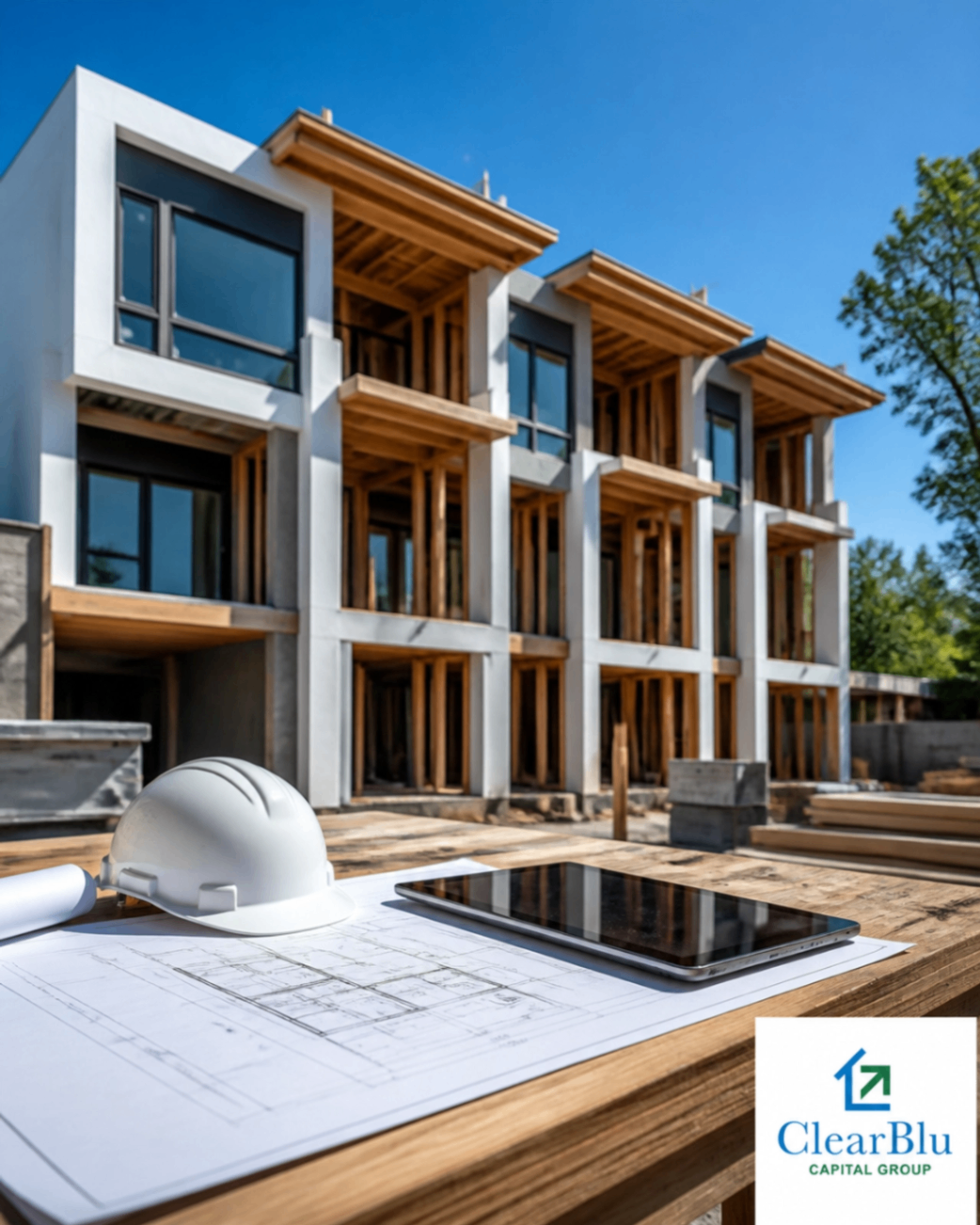
You do not need a decade-long development history to pursue your first ground-up residential project.
You do need a credible plan.
For first-time developers, the strongest applications demonstrate how the project will be designed, permitted, built, funded, and repaid. That means lenders evaluate more than your personal track record. They examine the property, construction team, budget, capital stack, reserves, and exit strategy together.
At ClearBlu Group, our goal is to bring clarity to that process. We help real estate investors understand what their project needs, identify the appropriate financing path, and prepare for a more efficient closing, potentially within 7–10 days when the file is complete and due diligence is ready.
What Are Ground-Up Construction Loans?
Ground-up construction loans provide capital to acquire land and construct a new residential property from the foundation up.
For small residential developers, that commonly includes:
- New single-family rental homes.
- Duplexes, triplexes, and fourplexes.
- Townhomes and eligible non-owner-occupied condominiums.
- Residential subdivisions with a clearly defined scope.
- ADUs or DADUs that support local density goals, where zoning, permits, and lender guidelines allow.
- Build-to-rent projects designed for a long-term rental or sale exit.
Unlike a traditional mortgage, a construction loan is funded in stages. The lender does not typically advance the entire commitment on day one. Capital is released through draws as construction reaches documented milestones.
That structure helps align the financing with the actual progress of the project.
Can a First-Time Developer Qualify Without Ten Years of Experience?
Yes: but “first-time developer” does not mean “unprepared developer.”
Lenders want to understand how the project will be successfully executed if you have not personally completed multiple ground-up builds. Your experience may be supported by other strengths, including:
An experienced general contractor.
A licensed GC with a history of completing comparable residential projects can provide critical execution credibility.Relevant renovation or construction experience.
Fix-and-flip projects, major additions, ADUs, or substantial rehabs may demonstrate that you understand budgets, permitting, subcontractors, and timelines.A capable development team.
Architects, engineers, project managers, real estate professionals, and construction consultants can strengthen the overall file.Strong financial organization.
Clear bank statements, a documented source of funds, a realistic budget, and properly structured entities reduce uncertainty.A conservative project plan.
Lenders respond better to realistic assumptions than aggressive projections built around perfect conditions.A defined exit strategy.
You should know whether you plan to sell the completed property, refinance into a DSCR loan, or hold the asset as part of a larger portfolio.
The imperative is simple: replace a limited personal track record with a stronger overall execution plan.
ClearBlu’s published Ground Up Construction Loan program is designed for eligible new 1–4 unit residential projects. Program fit depends on the property, borrower, team, budget, experience profile, and full underwriting review.

What Lenders Actually Underwrite
A lender is not only asking, “Do you have experience?”
The more important question is: “What evidence shows that this project can be completed and repaid?”
Expect underwriting to focus on five areas.
1. The Property and Project Scope
The site must support the proposed development. Lenders may review:
- Purchase contract or current land ownership.
- Zoning and permitted use.
- Site plans, architectural plans, and engineering documents.
- Utility access and site conditions.
- Permit status and expected approval timeline.
- Comparable sales or rental properties.
- The completed property’s estimated value.
If your project includes an ADU, DADU, duplex conversion, or small-lot subdivision, confirm that the proposed density is legally supportable before you commit significant capital.
2. The Construction Budget
A lender will examine whether your budget reflects the actual cost of completing the project.
Your package should separate:
- Land acquisition costs.
- Hard construction costs.
- Architectural, engineering, and permitting expenses.
- Utility, site work, and infrastructure costs.
- Builder fees and professional services.
- Financing and interest expenses.
- Construction contingency.
- Marketing, leasing, or selling costs.
A budget that leaves no room for surprises is not conservative. Materials change. Labor availability shifts. Permits take longer than expected. Site conditions create additional work.
For that reason, contingency reserves are essential: especially for a first project.
3. Your Capital Stack
The capital stack explains how the entire project will be funded.
It may include:
- Senior ground-up construction financing.
- Your cash equity.
- Land equity, if applicable.
- Equity from partners or private investors.
- Seller financing or other approved subordinate capital.
- Interest and contingency reserves.
ClearBlu’s current ground-up guidelines reference financing structures that may include the land component, construction costs, and an interest reserve, subject to program limits and underwriting. The published program also identifies loan amounts from $50,000 to $3 million, terms beginning at 12 months, and leverage based on the lower of applicable land value or purchase price, construction costs, and completed value.
Terms are not automatic. The project must support the requested structure.
Your objective should be to minimize unnecessary cash to close without creating a fragile capital plan. Bringing in the right financing early can help you preserve liquidity for reserves, project management, and future opportunities.
4. Liquidity and Contingency Reserves
First-time developers should expect lenders to examine liquidity carefully.
Reserves may be required for:
- Construction overruns.
- Interest payments during the build.
- Delays in permitting or inspections.
- Slower-than-expected sales or lease-up.
- Unplanned site or utility expenses.
Do not view reserves as idle capital. They are operational capacity.
A project that is fully funded only if everything goes perfectly is not ready to close.
5. The Exit Strategy
Your exit strategy should be defined before construction begins.
Common options include:
Sell the completed property.
This requires realistic resale comparables, a credible value estimate, and sufficient margin after construction and financing costs.Refinance into a DSCR loan.
If the property will become a rental, the completed asset may transition into long-term financing based primarily on rental income and property performance.Add the property to a rental portfolio.
Once you acquire multiple eligible 1–4 unit rentals, a portfolio loan may help consolidate debt or create access to equity for the next acquisition.
A DSCR transition should be planned early: not after the project is complete. Review projected rent, taxes, insurance, operating expenses, valuation, and debt service before you finalize the construction budget.
Explore ClearBlu’s One-Four Unit Rental Loans for potential long-term financing considerations, or review Rental Portfolio Loans as your holdings expand.
How Construction Draws Work
Construction draws connect the lender’s funding to verified progress on the site.
A typical draw process may include:
- You submit a draw request.
- The lender or third-party inspector reviews construction progress.
- Invoices, lien waivers, and updated cost-to-complete information are collected.
- The draw is approved based on completed work.
- Funds are released for the next phase.
Common milestones include:
- Site work and foundation completion.
- Framing and roof installation.
- Rough plumbing, electrical, and mechanical systems.
- Exterior work and drywall.
- Interior finishes and substantial completion.
- Final inspections and certificate of occupancy.
Your construction schedule should match your draw schedule. If your GC needs frequent payments but the loan is structured around infrequent milestones, that mismatch can create unnecessary pressure.
Ask about draw timing, inspection procedures, documentation requirements, and interest reserve mechanics before closing.

How ClearBlu Can Support a New Developer
The right lender does more than issue a term sheet.
ClearBlu’s approach is built around understanding the full opportunity: the property, borrower, capital, construction plan, and intended exit. That can be especially valuable when you are completing your first development project.
Our support can help you:
- Identify the appropriate product path.
- Organize the project information lenders need.
- Evaluate how much cash is required to close.
- Structure borrowing through an appropriate business entity.
- Coordinate the construction budget and draw expectations.
- Prepare for a DSCR refinance or sale exit.
- Protect your personal credit strategy through disciplined entity and capital planning.
Entity financing does not eliminate personal guarantees or recourse obligations. However, separating project-level borrowing from personal finances can help you organize obligations, maintain clearer records, and avoid relying on personal credit for every project expense.
That distinction matters as you build toward multiple properties.
Prepare Your First Ground-Up Deal for Approval
Before applying, assemble a complete project package.
Use this checklist:
- Property address or target market.
- Purchase contract or land documentation.
- Preliminary plans and project scope.
- Zoning and permit status.
- Detailed construction budget.
- GC information and comparable project history.
- Timeline with construction milestones.
- Personal financial statement.
- Bank statements and proof of liquidity.
- Entity documents and ownership structure.
- Comparable sales or rental analysis.
- Sale and refinance exit scenarios.
A complete package creates momentum. It also gives the lender enough information to identify issues before they become closing delays.
Take the Next Step Toward Your First New Build
Your first development project does not require a perfect résumé. It requires disciplined preparation, a credible team, sufficient reserves, and a financing partner willing to evaluate the complete picture.
Whether you are planning a single-family build, a duplex, a fourplex, a small subdivision, or a density-supporting ADU project, the financing conversation should begin before you finalize the land or construction contract.
Ready to move from concept to capital?
Apply for ground-up construction financing through ClearBlu Group. Submit your project details, explore your lending path, and start building with greater clarity.
Your first build can become the foundation for everything that follows. Unlock the potential of your project: and position yourself to witness growth.